
Battery Myth | Can a Battery ‘Reverse’ its Polarity?
Actually, yes, but not without help. Reversing the polarity on a battery can happen only a couple of ways.
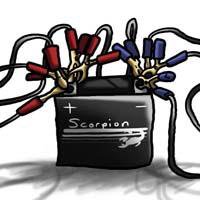
If you have a wet cell battery are filling it for the first time, and are using an old style, non smart charger, and short the terminals while you are filling it, yes it is possible to hook up the charger backward and reverse charge it. You would not necessarily notice a spark because the battery gains voltage as the battery is being filled, and if it is being charged while you are filling it, the short would not be a strong enough discharge to create a spark. If that was to happen, and a charger was hooked on backwards, or if it was installed in a kick start vehicle and hooked up backwards, then you can end up with a battery that has been charged, but backwards. Notice there are a lot of ‘ands’ in the above scenario. This situation is possible, but not very likely.
The second possibility is reversing polarity after the activation process. This is also rare, as it requires a sequence of errors to be present after the installation of the battery. The only way for this to happen would be to completely discharge the battery, either by leaving the key on, or by an unnoticed dead short that completely dissipated the charge over a few days. After that happened it would appear to be a dead battery.
Remember, a completely discharged battery is nothing more than an empty vessel. In order to gain a negative charge, it would then necessitate being hooked up backwards, and charged that way. So the real question here is: how can a battery reverse polarity after it has been installed? That same previously discharged battery would then be vulnerable to reverse charging, either by connecting the battery charger backwards, or by a charging system that reversed polarity (very rare, but still possible).
So let me restate: The only way for a battery that has a positive charge, to reverse itself, is for the battery to be completely discharged, and then reversed charged. We have seen this happen a couple of times, and it would be considered the more common of these rare situations.
For all intents and purposes, the battery will be ruined. You could technically charge it up, negatively, and continue to use it, but your plates are designed with the positive plates being lead dioxide, and the negative being composed of a sponge lead, which would now be reversed. Because the reversed battery is no longer formatted correctly, it will only work to a limited degree. The fact of the matter is, a lead acid battery cannot reverse its own polarity without an external stimulus. It is just not possible.
6 Responses
Subscribe to comments with RSS.
-
Byron
May 25, 2012 a 7:02 am-
Batteries can only be reversed in polarity if they meet this criteria: They have to be completely discharged first. So with your batteries in parallel, one battery was probably drained further than the other. Both were used up but one went dead first. Discharged battery plates are essentially neutral, so when both batteries were recharged together, the plates in the dead battery swapped chemistries, and consequently polarity. Replacing that battery is advised.
Tech
May 25, 2012 a 10:23 am
-
-
With the batteries in parallel it is essentially one big battery now and should be wired to charge and discharge accordingly. (positive line out off of one battery and negative line out from the other battery) This will also achieve a better and correct charging method as the charge goes across both batteries as opposed to one battery then to the other if both of your line outs are from one battery and the other battery is just \“jumped\” to the first one. So in the reply, \“one being drained further than the other\” that should not hold water if the batteries are wired correctly. Otherwise i agree with the replied stated cause and remedy. Great article and post!
Sam
Sam W
May 31, 2012 a 8:33 am-
You‘re correct, in parallel they behave as one unit. But if the batteries were not evenly charged to begin with, it is possible that one will run down first. This is common in marine applications where there is a switch to use one battery, and then both. In this case, one battery is always being used, while the other only drains when the switch parallels them.
Tech
May 31, 2012 a 9:12 am
-
-
Switched pos neg terminals on installation on a marine bat number 2…
Dual bat with a switch… There is a short in the wiring I think on bat two….I have replaces the batteries, switch alternator….
Where should I start…thanks any help,would be appreciatedJay
November 18, 2012 a 5:58 am
Leave a Comment
Archives
- May 2013 (1)
- March 2013 (2)
- February 2013 (1)
- January 2013 (2)
- November 2012 (2)
- October 2012 (2)
- September 2012 (3)
- August 2012 (2)
- July 2012 (1)
- June 2012 (3)
- May 2012 (3)
- April 2012 (2)
Calendar
| 1 | 2 | 3 | 4 | |||
| 5 | 6 | 7 | 8 | 9 | 10 | 11 |
| 12 | 13 | 14 | 15 | 16 | 17 | 18 |
| 19 | 20 | 21 | 22 | 23 | 24 | 25 |
| 26 | 27 | 28 | 29 | 30 | 31 | |


When I pulled my boat out a few weeks ago, the batteries were dead, because I forgot to unhook them at the end of last season. I have 2 batteries in parallel (negative to negative; positive to positive), with a switch, 12-volt system. I put a charger on one battery to start my boat (switch set to both batteries). After running, boat wouldn‘t start. Pulled both batteries out. One measured +11.7V and the other -6V! How does that happen? I take it from your article that I should replace the battery with reversed polarity. Thanks for your reply.